ZCCM-IH’s Royalty Bet Pays Off as Kansanshi Deal Delivers $110.6 Million
ZCCM-IH Earns $110.6 Million From Kansanshi Mine Royalty After Swapping Dividends for Revenue Share
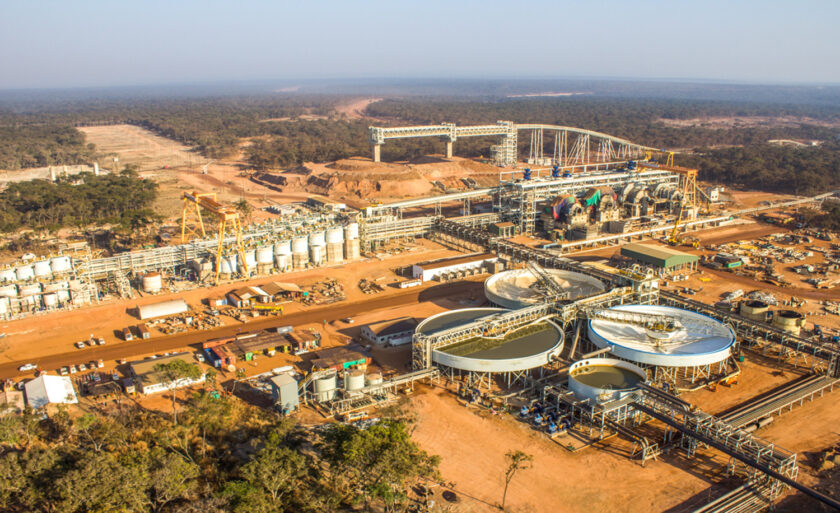
ZCCM Investments Holdings Plc’s decision to swap dividend rights for a revenue-linked royalty at Kansanshi Mining Plc is proving lucrative, with the state-linked investor pocketing $110.6 million between 2022 and 2024.
The Lusaka-based company introduced the 3.1% gross revenue royalty in 2021, a move designed to stabilize cash flow from Zambia’s largest copper mine.
The payments have continued even as Kansanshi suspended dividends in 2023 and 2024, underscoring how the model shields Zambia from the volatility of mining profits.
The deal marks a significant departure from traditional shareholder structures and highlights Zambia’s evolving approach to resource investment.

Breaking Free From Dividend Volatility
For nearly a decade, ZCCM-IH’s earnings from Kansanshi were tied to dividends. Between 2012 and 2021, the company collected $244.25 million, averaging about $24 million annually. But payouts fluctuated sharply, reflecting swings in copper prices, rising costs, and capital-intensive expansion projects.
Mining boards often suspend dividends during reinvestment cycles, leaving shareholders exposed. For ZCCM-IH, that unpredictability complicated investment planning and weakened its ability to support new ventures.
The 2021 restructuring sought to change that dynamic by linking returns to revenue rather than profit.
Royalty Mechanics: A Contractual Stream
Under the revised arrangement, ZCCM-IH receives 3.1% of gross revenue from all minerals produced within Kansanshi’s licence area, paid quarterly until the mine’s projected closure in 2045.
Unlike dividends, royalties are contractual and calculated before most costs are deducted.
That ensures income for Zambia even when profits are squeezed by rising energy prices, declining ore grades, or heavy reinvestment.
The royalty is distinct from Zambia’s Mineral Royalty Tax, which mining companies pay directly to the government. Instead, it represents a commercial stream tied to ZCCM-IH’s equity stake because payments are linked to mineral sales, ZCCM-IH also gains direct exposure to global commodity markets. When copper prices rise on exchanges such as the London Metal Exchange, royalty income climbs in tandem.
$110.6 Million in Three Years
The impact was immediate. From 2022 to 2024, ZCCM-IH received:
- 2022: $17.7 million
- 2023: $38.5 million
- 2024: $54.5 million
Crucially, Kansanshi declared no dividends in 2023 and 2024. Under the old model, ZCCM-IH would have earned nothing.
Instead, the royalty guaranteed steady inflows, insulating the company from dividend droughts.
Why Royalties Are Gaining Ground
Mining is among the world’s most capital-intensive industries, requiring constant investment in equipment, infrastructure, and exploration. Costs fluctuate with fuel, labour, and environmental compliance.
Because dividends depend on net profit, they can vanish when margins tighten. Royalties, by contrast, are calculated from revenue before costs are deducted, creating more predictable income streams.
They also reduce exposure to boardroom discretion. Dividends are optional; royalties are contractual. This model has gained traction globally, particularly among specialized royalty firms that finance projects in exchange for revenue shares.
Expansion Could Lift Future Payments
Royalty income could rise further as Kansanshi implements the S3 Expansion Project, scheduled for commissioning in August 2025.
The project aims to boost processing capacity and extend mine life despite declining ore grades. Higher throughput would increase mineral sales revenue and therefore ZCCM-IH’s 3.1% royalty.
While future payments remain sensitive to copper prices and demand, the expansion strengthens the long-term outlook for ZCCM-IH’s revenue stream.
Strengthening ZCCM-IH’s Financial Base
The Kansanshi royalty is reshaping ZCCM-IH’s financial position. Historically reliant on fluctuating dividends, the company now enjoys predictable cash flow.
That stability enables more effective investment planning and supports diversification into Zambia’s gold sector, mineral exploration, and initiatives aimed at strengthening local participation in mining value chains.
Such moves align with Zambia’s broader push to diversify mineral production and deepen domestic involvement in the industry.
Could the Model Spread?
The success of the Kansanshi royalty has sparked debate over whether similar structures could be applied to other ZCCM-IH holdings.
While not all assets may suit conversion from equity-based income to royalties, the deal provides a compelling case study in how restructuring investment terms can reshape financial outcomes.
Negotiations with mining partners and consideration of existing ownership structures would be required. Still, the Kansanshi deal has set a precedent that could influence future investment models in Zambia’s mining sector.
Globally, royalty and streaming models have become increasingly popular. Canadian firms such as Franco-Nevada and Wheaton Precious Metals have built billion-dollar businesses by financing mines in exchange for revenue-linked payments.
For Zambia, adopting similar structures through ZCCM-IH could help attract investment while ensuring predictable returns for the state-linked shareholder. It also positions the company as a more resilient investor, less exposed to the cyclical nature of mining profits.
Analysts note that while royalties reduce upside potential during boom years when dividends can soar, they provide a floor during downturns. For a country seeking to stabilize mining revenues, that trade-off may be worthwhile.
Zambia’s Policy Environment
The Kansanshi deal also reflects Zambia’s broader policy environment. Successive governments have sought to balance attracting foreign investment with ensuring greater local benefit from mining.
Royalty structures offer one way to achieve that balance. By securing predictable income for ZCCM-IH, the state indirectly strengthens its fiscal position while maintaining investor confidence.
The model could also support Zambia’s ambitions to expand downstream processing and diversify into other minerals such as gold, manganese, and cobalt sectors where ZCCM-IH is already exploring opportunities.
Investor Confidence and Market Signals
For investors, the Kansanshi royalty sends a signal that Zambia is willing to experiment with financial structures that reduce risk.
Stable income streams make ZCCM-IH a more reliable partner for joint ventures and financing arrangements.
They also enhance the company’s ability to raise capital for exploration and expansion projects.
At a time when global investors are scrutinizing resource nationalism and policy stability in Africa, the Kansanshi deal offers a case study in how state-linked investors can secure value without undermining private-sector participation.
The next test will come with the commissioning of the S3 Expansion Project in 2025. If production volumes rise as expected, ZCCM-IH’s royalty income could climb significantly.
Longer term, the company’s ability to replicate the model across other assets will determine whether the Kansanshi deal remains a one-off or becomes a blueprint for Zambia’s mining sector.
Either way, the decision to swap dividends for royalties has already reshaped ZCCM-IH’s financial trajectory and may influence how resource wealth is shared in Zambia for decades to come.
The Bottom Line
By converting its dividend rights in Kansanshi Mining Plc into a 3.1% revenue royalty, ZCCM-IH secured a steady income stream that has already delivered $110.6 million in three years.
The strategy insulated the company from dividend droughts and positioned it for long-term growth.
In a sector defined by volatility, the Kansanshi deal demonstrates the advantages of linking returns to revenue rather than profit a model that may increasingly shape how Zambia structures mining investments.